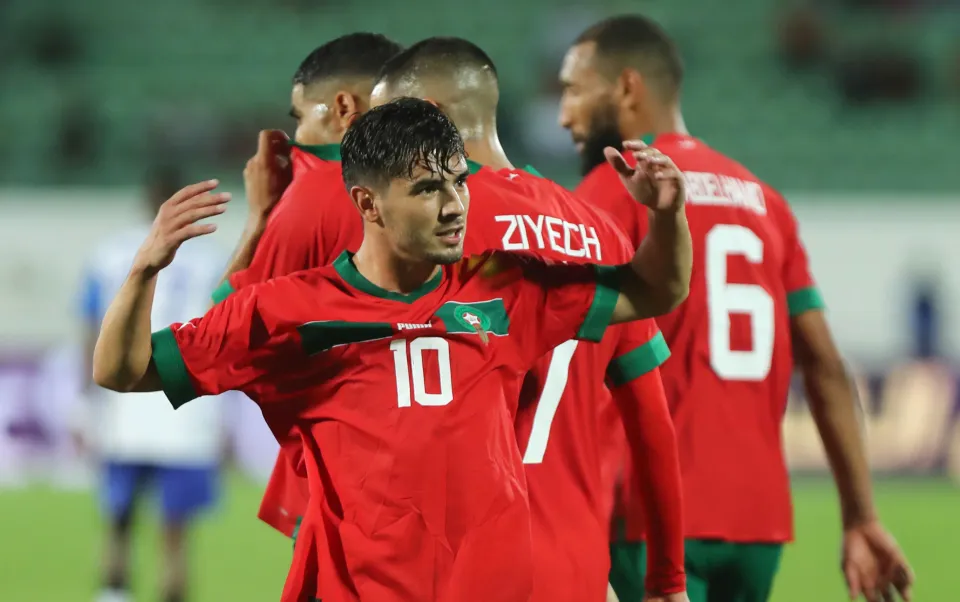
He chose Morocco over Spain. The choice was treated as personal. It was structural.
Brahim Díaz was born in Málaga, raised in Spain, developed at Manchester City and Real Madrid. He played for Spain at every youth level. By every conventional measure, he was a Spanish player who happened to have a Moroccan grandmother.
When he announced for Morocco in 2024, the Spanish press treated it as a betrayal and the Moroccan press treated it as a homecoming. Both framings flattened what was actually happening. He chose Morocco because Morocco offered him a more central role, a more defined identity within the squad, and a more meaningful relationship between his football and his self-understanding. Spain would have used him as a rotation forward. Morocco built around him as a number ten.
This is the pattern. African federations are no longer competing for diaspora players from a position of weakness. They are offering something European federations do not, which is the chance to be the project rather than a piece of it. Morocco offered Brahim Díaz the same thing Algeria offered Mahrez fifteen years ago, the same thing Senegal offered Mané, the same thing the Ivory Coast offered Drogba. A footballer with multiple options chooses the option that makes him most himself.
Whether he wins Morocco a trophy this AFCON will be discussed for months. The more important fact is what his career now represents. He is the most visible Spanish-born Moroccan footballer in history. He plays for Real Madrid. He scores in Champions League knockouts. He arrives at AFCON as the technical centerpiece of the host nation.
The Spanish press will frame him as a Spanish player playing for Morocco. The Moroccan press will frame him as a Moroccan player who chose home. Both framings will be wrong. He is something newer than either. The press has not built the vocabulary for it yet.