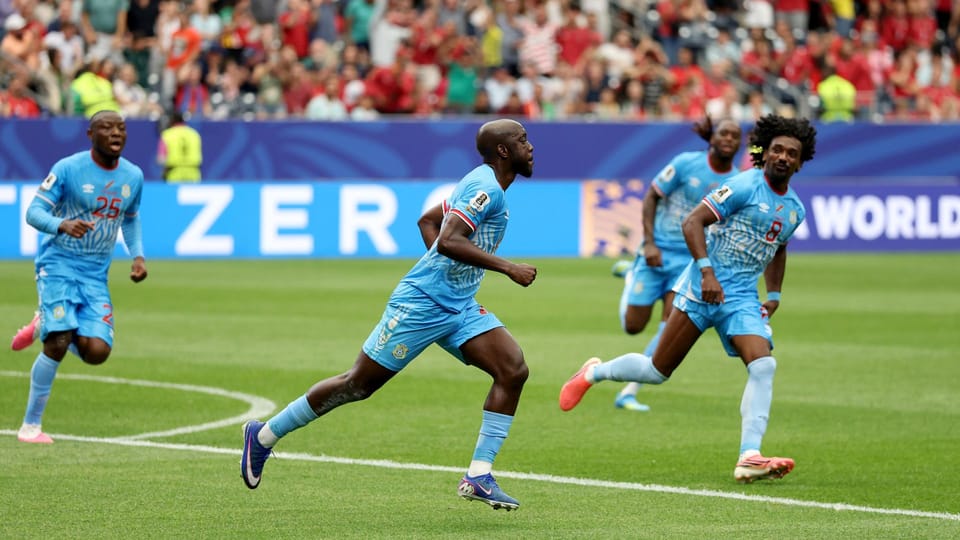
Sébastien Desabre's DR Congo held Portugal to a 1-1 draw in Houston. It is the Leopards' first World Cup appearance since 1974. That sentence should be the headline.
It is not the headline. Within hours, the English-language coverage had reorganized itself around a single subject. The BBC ran a piece on Cristiano Ronaldo struggling after fellow superstars sparkled. Sky Sports went with Ronaldo flattering to deceive. FourFourTwo published a column arguing that Ronaldo is holding Portugal back and that it would be bad for football if he won the World Cup, alongside a separate piece about an unusual gesture he made on the pitch. By the end of the night, four of the most-read English match write-ups treated DR Congo as the backdrop for a referendum on a 41-year-old captain.
This is the cycle. A first-tournament-in-fifty-two-years performance from a Central African side ranked well below its opponent gets converted, in real time, into a European character study.
The Congolese reading is available. It is just not being reached for. Desabre, the French coach who took over the Leopards, said before the match that Portugal had the quality to reach the semi-finals at minimum. That is a coach managing expectations downward. What he then did on the pitch was set up a side that conceded once, equalized, and held. The point is not that Portugal was poor. The point is that DR Congo was organized enough to make Portugal look poor. Those are different claims and only one of them is being made.
The FourFourTwo column on Ronaldo is worth reading on its own terms. It argues, with some care, that Ronaldo is the obvious weak link in Roberto Martínez's squad and that a Portugal World Cup win built around him would be a bad outcome for the sport. Whatever the merits of that argument, notice the frame. The match is an opportunity to relitigate Ronaldo. DR Congo is the venue.
This is the same framing problem the European press has every time an African side delivers a result. Cape Verde held Spain to a goalless draw in Atlanta, a debutant nation taking a point from the European champions. Similar patterns emerged elsewhere in the tournament. Three results within days, against some of the most decorated national teams in the world, and the coverage has split into two registers. The Cape Verde game became a story about Spain's blunt attack. The DR Congo game has become a story about whether Ronaldo should be dropped.
The African sides are doing the same job in these matches. They are showing up against opponents the bracket assumed would brush past them, and they are taking points. The coverage cannot process that as a pattern. It processes each one as a malfunction of the European side.
L'Équipe at least asked the question directly. Their tactical debrief was headlined: is Cristiano the only problem for Portugal? The framing is still Portugal-centric but the question contains its own answer. If you have to ask whether your 41-year-old captain is the only problem, you are admitting that there are others. Martínez is reportedly set to leave after the tournament regardless of how it ends. The squad's structural issues, the midfield balance, the pressing triggers, the lack of a coherent plan beyond getting the ball to Ronaldo, all of this was visible in Houston. None of it is being treated with the same urgency as the question of whether the captain should start the next match.
This is what "scared to take him off" reveals when the BBC uses it as a pull quote. It is not really about Ronaldo. It is about a coach who has lost the authority to make the call his job requires him to make. That is a Portugal problem. It existed before kickoff and it will exist after Ronaldo retires. DR Congo did not cause it. DR Congo exposed it.
The Leopards play Uruguay and South Korea next in Group K. They are not favourites in either match. They do not need to be. They have already done the thing the tournament did not expect them to do, which is take a point from the group's seeded side in the opening fixture. Desabre has the squad organized. The defensive structure held. The equalizer came from a side that was supposed to absorb and lose.
The English press will keep writing about Ronaldo. That is a known constant. What it will not do, mostly, is sit with the Congolese performance long enough to describe what it actually was. A coach who knew what he was doing, a back line that did not panic, a team making its first World Cup appearance in over half a century and refusing to be a footnote in someone else's story.
The footnote is the framing. The football has already moved on.