Joe Cole has put a line on the record. To win the World Cup, he says, someone in an England shirt is going to have to take a moment by the scruff of the neck. There will be a passage where England are under the cosh. A player will need to drag them through it.
This is not wrong. It is also not new.
The English pre-tournament cycle is one of the most legible objects in football media. It runs the same way every two years. A former international, usually with two or three tournament squads on his record, is invited to articulate the missing ingredient. The missing ingredient is almost always character-shaped. Someone to grab the game. Someone to step up. Someone to lead. The vocabulary is moral before it is tactical, and it stays moral right up until the team goes out.
The rest of the week's coverage fits the same template. Phil McNulty writes that the New Zealand warm-up was a training game and that England and Tuchel now need to get serious. Thomas Tuchel himself, in the post-match, calls the first-half display freestyle and says his players need to be better. The New Zealand coach agrees. Jules Breach writes that Harry Kane is the most consistent striker in world football and that if England are to win this summer he will play a huge part. Clinton Morrison writes that John Stones has to start alongside Marc Guehi. The Mastodon feed asks whether this is Kane's time, whether Kane is England's greatest ever striker, whether Kane is a Ballon d'Or contender.
Every one of these is a respectable football opinion. Together they are something else. They are the machinery of a country talking itself into and out of belief at the same time, on a fortnightly rhythm, on the same beats.
What is interesting about the Cole framing is how cleanly it admits the structural anxiety. England will be under the cosh. That is the assumption. Not might be. Will be. The whole sentence is built around an expected moment of crisis that someone must rescue them from. This is not how Spain talks about itself before a tournament. Mikel Merino, in the same week of FourFourTwo coverage, is talking about Lamine Yamal being probably the best in the world at the minute and adding the qualifier that he cannot do it on his own. The Spanish framing is collective and a little bored. The English framing is individual and a little afraid.
The gap is not about talent. The gap is about what the press has trained its readers to expect. Spain's press writes about a system that occasionally produces a Yamal. England's press writes about Yamal-shaped saviours who occasionally find a system.
Tuchel inherits this. He did not build it. The freestyling comment is interesting precisely because it is the language of a coach trying to retrain the conversation toward structure, not heroism. He wants the players serious, organised, repeatable. He spent his pre-tournament week answering questions about whether transfer speculation would distract members of his squad, because Sky Sports has correctly identified that England's World Cup schedule is a logistical problem for any player whose agent is working a move. These are structural concerns. The press around him is still mostly writing in the older register.
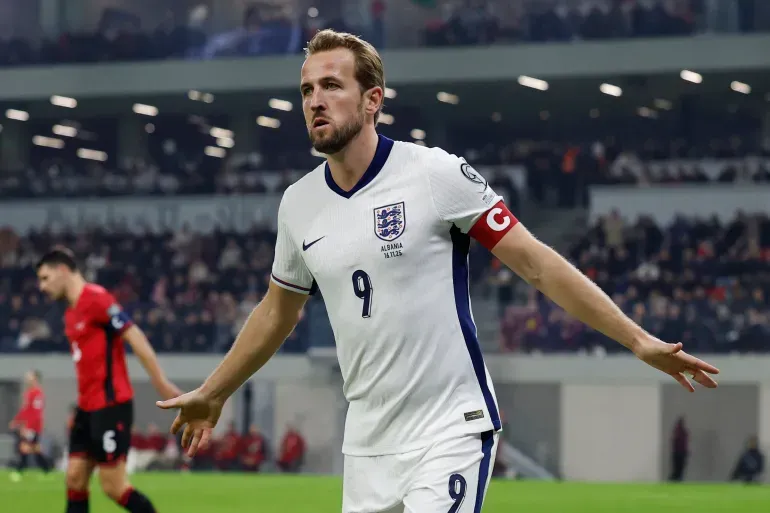
The Kane question sits inside all of this. Kane goes into the tournament described as irreplaceable, on the brink of records, in the finest season of his career, with the Ballon d'Or floated as a serious sentence. He has never won an international tournament, and is asked again, as he was asked in 2018 and 2021 and 2022, to be the answer. The BBC's own framing concedes the loop. Is this Kane's time. It was Kane's time last time. It will be Kane's time next time, if there is a next time.
None of this is a prediction about how England will do. Tuchel's England might win the thing. They have a squad that on paper belongs in the last four. The point is narrower. The point is that the conversation around the squad has not updated since 2006, when Joe Cole was in it. The vocabulary of scruff-of-the-neck moments and under-the-cosh passages and irreplaceable captains is the vocabulary England's football culture reaches for because it is the only one fully built out in English. Spain has built a different one. Germany has built a different one. France has built a different one, and Camavinga is reportedly responding to his squad omission by taking a Harvard Business School course, which is its own commentary on what a modern footballer does with an unexpected June.
England will get its tournament. Tuchel will get his chance to retrain the register from inside it. The press will get its scruff-of-the-neck moment, or it will not, and either way the column is already written.
The cycle is itself the story.