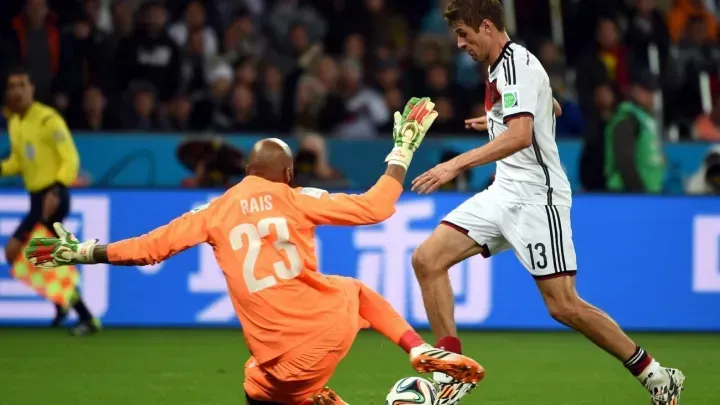
Ten years on, the tactical breakdown.
Algeria did not park the bus. That framing was wrong at the time and remains wrong. They played a mid-block 4-2-3-1 with two disciplined defensive midfielders, a high line that pressed German build-up, and wide players who tracked back to form a 6-3-1 out of possession.
The shape worked. Germany struggled to find penetration through the centre. Khedira and Schweinsteiger were neutralised by the Algerian double pivot. Özil drifted wide because the central space was closed. Müller's late runs were tracked by Bougherra, who had the second-best tournament of any African defender that year.
Germany did not score in regulation. They scored twice in extra time, against a squad that was running on empty after pressing for ninety minutes. The press at the time framed this as Algeria collapsing. It was actually Algeria running out of fuel. A different result, with different framing, would have read the match as Algeria coming closest of any opponent in that tournament to denying Germany a path through the round of sixteen.
The shape was sophisticated. The execution was excellent. The personnel choices were correct. Halilhodžić, whatever the press said about him then or now, set up a team that should have beaten Germany.
He did not. But the football was better than the result. Ten years on, that distinction matters.