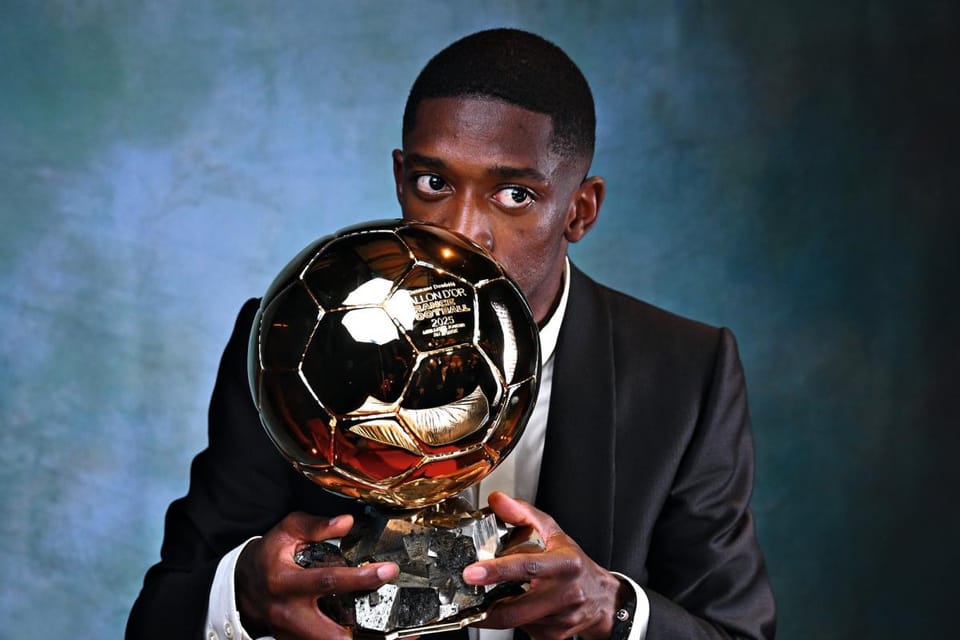
The vote was not about who had the best year. The vote was about which year the panel chose to weigh.
Dembélé won the Ballon d'Or because PSG won the Champions League. Lamine Yamal finished second because Spain reached the Euro final and Barcelona had a domestic season. Vitinha third because PSG. Mbappé out of the top three because Madrid did not win the Champions League. The order tells you what the voters value, which is European club football's biggest trophy, weighted heavily, almost mechanically.
This is not new. It has been the pattern for a decade. What is new is how openly the structure now shows itself. The Ballon d'Or has stopped pretending to be a holistic judgment of the season. It has become a Champions League prize with subsidiary awards attached.
Whether you think Dembélé deserved it depends on what you think the trophy is for. If the answer is best player on the team that won the most significant European competition, Dembélé is a defensible winner. If the answer is best individual season in world football, the case is harder. He was not the most decisive player in his own team's run. Vitinha was. The voters know this. The voters voted for the captain of the moment, not the engine of it.
The geography of the panel has not changed. One vote per top fifty FIFA country, weighted toward Europe and South America, voted on by journalists employed by outlets that prioritize the leagues they cover. The structural critique I made last year applies again, unchanged. The trophy is becoming more European, not less, even as the football itself is becoming more global.
The interesting question is not whether Dembélé deserved it. The interesting question is whether the trophy still measures what it claims to measure. It does not. It measures what the panel can see.