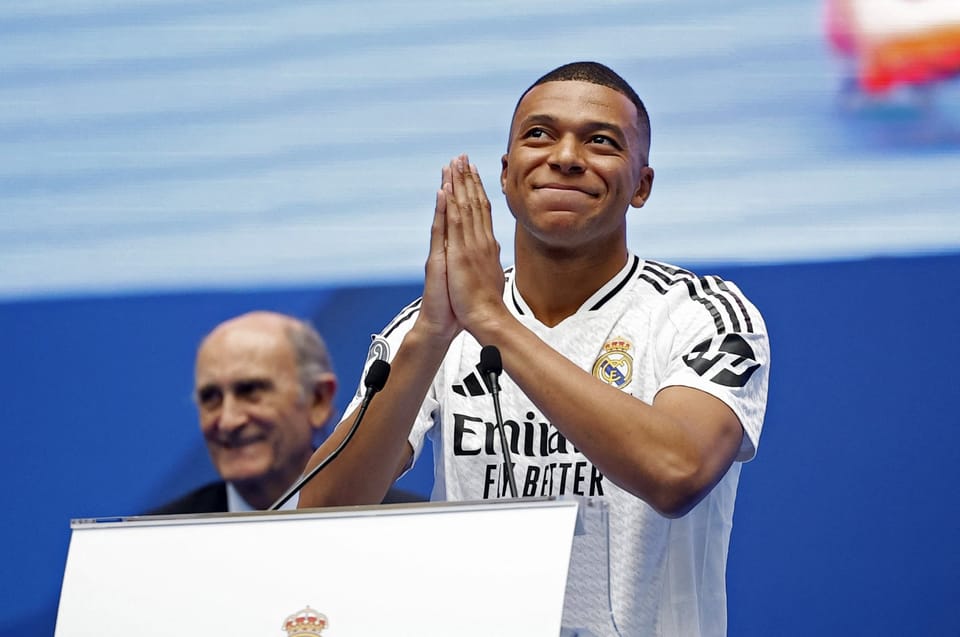
You did not need to know football to know this story was political.
The most-followed Frenchman in the world, born in Bondy, raised in a banlieue, leaving the French league for Spain. The French president once flew to Doha to convince him to stay in Paris. The French president. For a footballer. That part should tell you everything.
Mbappé's career has been narrated as a French story since he was sixteen. He was the symbol Macron wanted to put on every poster. He was the proof that French integration worked. He was, when he refused to sing the Marseillaise loudly enough, evidence that something was wrong.
He carried more political weight than any French player since Zidane. Probably more.
The move to Madrid is not, in itself, unusual. Real Madrid signs the world's best player. They have done this for seventy years. But the framing in France was about loss. The framing in Spain was about acquisition. The framing in North Africa, where most of his family is from, was about something else.
It was about whether France actually believed in him, or only used him.
The post-colonial dimension of Mbappé's career has been mostly avoided by the French press. They are uncomfortable with the question. The Spanish press will not ask it because it is not their problem. The English press treats it as exotic.
But it is the question. It has always been the question. And his decision to leave Paris, even for the same money he could have made in France, is itself an answer.